
海外党必看:免费VPN加速器真的能用吗?3步教你选对回国加速器无缝刷国内资源

I know how it feels—sitting in a coffee shop in New York, trying to watch the latest episode of your favorite Chinese drama on iQIYI, only to get that annoying "This content is not available in your region" message. Or playing Honor of Kings with your friends back home, but the lag is so bad you can’t even land a skill. You’ve probably searched for "vpn加速器免费" or "免费翻墙" online, hoping to find a quick fix. But are these free options really reliable? And when it comes to paid services, you might wonder: Malus VPN好用吗?和甜蜜蜂VPN对比哪个回国效果更好?In this guide, I’ll break down why region restrictions happen, why free tools are risky, compare the two popular VPNs, and share a trusted solution that lets you access domestic resources seamlessly—without the hassle.
Why Can’t You Access Domestic Resources Overseas?
The core issue is geo-restriction. Most Chinese apps and websites (like Tencent Video, NetEase Cloud Music, or WeChat Mini Programs) use IP-based checks to limit access to users inside China. If your device has an overseas IP address, you’ll be blocked immediately. A "回国加速器" (return-to-China VPN) works by routing your internet traffic through a server in China, masking your overseas IP with a Chinese one. But not all accelerators are created equal—some are slow, some are unstable, and some even put your data at risk.
Free VPN Accelerator & Free翻墙: Tempting But Risky?
Let’s get real about "vpn加速器免费" and "免费翻墙" tools. They sound great on paper, but here’s the catch: free services rely on overcrowded nodes (since everyone wants free access), so speed is often glacial. I tried one free tool last month—loading a WeChat Mini Program took 5 minutes, and it disconnected halfway through my video call with family. Plus, many free tools make money by selling your personal data or bombarding you with intrusive ads. Some even contain malware that can steal your passwords or bank info. For anyone who needs consistent access to domestic resources (like streaming dramas or using work apps), free options are more trouble than they’re worth.
Malus VPN好用吗?对比甜蜜蜂VPN,谁更适合回国加速?
Let’s compare two popular paid options first. Malus VPN: I’ve heard from followers that it’s easy to set up, but during peak hours (8 PM China time), the speed drops sharply—streaming 1080p Bilibili videos becomes a buffering nightmare. Sweet Bee (甜蜜蜂) VPN: Their iOS app is smooth, but Windows users often complain about crashes when switching between apps. Both are decent, but do they check all the boxes for overseas users? This is where 番茄加速器 stands out. Let’s break down why it’s a better choice: First, global node distribution. Tomato has nodes in over 30 countries, including multiple high-speed servers in China. No matter where you are (London, Sydney, Toronto), you can connect to a nearby node for low latency. The smart recommendation feature picks the best line automatically—so you don’t have to waste time testing different nodes. Second, multi-platform support. Tomato works on Android, iOS, Windows, and Mac. You can use one account on up to 5 devices at the same time—perfect if you have a laptop for work, a phone for WeChat, and a tablet for streaming. Third, stable unlimited traffic. No more worrying about hitting a data cap mid-movie. The smart分流 (smart routing) technology only accelerates domestic apps—so your regular internet (like Google or email) stays fast. For streaming lovers, there are dedicated lines for iQIYI, Tencent Video, and Bilibili with 100M独享带宽 (exclusive 100M bandwidth), so 4K videos load instantly. For gamers, the low-latency game lines make Honor of Kings or PUBG Mobile feel like you’re playing from China. Fourth, data security. Tomato uses AES-256 encryption and dedicated专线传输 (dedicated line transmission) to keep your data safe from hackers. This is crucial if you’re accessing sensitive apps like Alipay or your company’s internal system. Fifth, after-sales support. Their 24/7 technical team is always ready to help. I once had a problem connecting to a specific app, and they responded within 10 minutes, guiding me through the fix step by step. Compared to Malus and 甜蜜蜂, Tomato offers a more comprehensive solution—faster speed, more platform support, unlimited traffic, and reliable security. It’s the go-to choice for many overseas students and workers I know.
3 Steps to Choose the Right Return-to-China Accelerator
Step 1: Check platform compatibility. Make sure the accelerator works on all your devices (phone, laptop, tablet). Tomato’s multi-platform support covers all major systems, so you don’t have to switch between tools. Step 2: Prioritize speed and stability. Look for unlimited traffic and dedicated lines for your needs (streaming or gaming). Tomato’s 100M exclusive bandwidth and smart routing ensure a smooth experience. Step3: Don’t skip security and support. Free tools often compromise your privacy, so choose a service with strong encryption (like Tomato’s AES-256) and 24/7 support.
Final Thoughts: Stay Connected to China Without Hassle
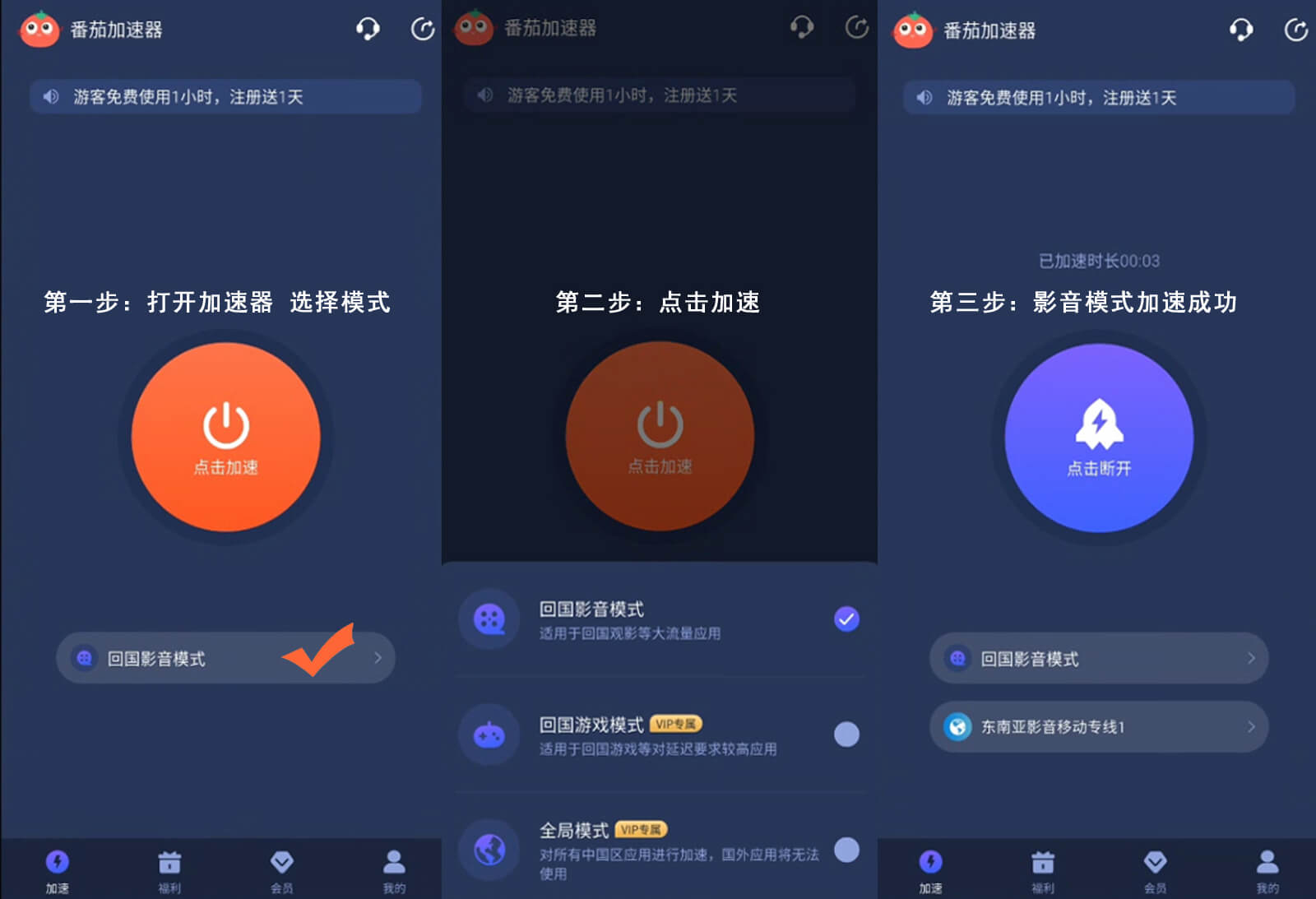
Going back to the initial question: Is "vpn加速器免费" worth it? Probably not—you get what you pay for. Instead of dealing with slow speeds and security risks, invest in a reliable service like 番茄加速器. It lets you watch your favorite dramas, play games with friends back home, and use domestic apps seamlessly. Whether you’re a student missing home or a worker needing to access Chinese tools, Tomato is the solution to break through region restrictions. Don’t let distance keep you from staying connected to the things you love in China.